
May 13, 2026
How to Power a Tiny Home: Shore Power, Solar, and What You Actually Need to Know
When most people picture a tiny home, they imagine something off-grid — solar panels on the roof, a composting toilet, running on rainwater somewhere deep in the woods. The reality for most tiny home owners is much more straightforward: you plug in, just like an RV.
This post covers the two main ways to power a tiny home, starting with the most common and practical option.
Shore Power: The RV Standard
“Shore power” is the term borrowed from the boating world for plugging into an external power source — as opposed to running on batteries or a generator. For tiny homes and RVs, shore power is the default, and the infrastructure is already everywhere.
The Plug
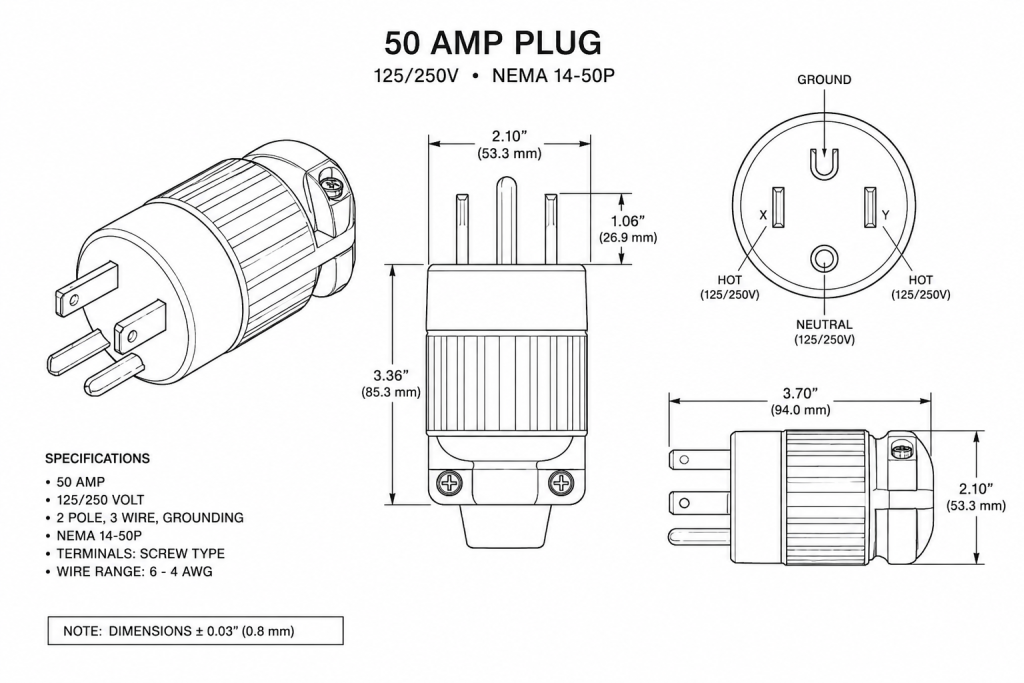
The standard shore power connection for a full-sized tiny home is a 50-amp, 4-prong connector — the same plug used at RV parks and campgrounds across North America. If you’ve stayed at an RV site, you’ve seen these pedestals. The connection carries 240 volts (two legs of 120V), which gives you enough capacity to run a mini-split, electric water heater, washer/dryer combo, full kitchen appliances, and everything else you’d realistically need in a tiny home — simultaneously.
Setting Up Shore Power at Your Property
If you’re parking your tiny home on your own property — a backyard, a rural lot, a family member’s land — you’ll need to run a 50-amp outlet or pedestal from your main electrical panel.
A good analogy: it’s basically the same job as installing a Level 2 EV charger. If you’ve looked into charging an electric vehicle at home, you already understand the scope. You’re running a dedicated 240V circuit from your breaker panel to an outdoor outlet. Same permitting category, similar materials, similar labor involved.
Can you do it yourself? If you’re in Washington State and the work is on your own property, a licensed electrician isn’t legally required — but an electrical permit is. The permit triggers an inspection, which honestly protects you. A 50-amp outdoor circuit done wrong is a fire hazard. If you’re confident with electrical work, the permit process is manageable. If you’re not, hire it out.
What does it cost to hire an electrician? Depending on how far the run is from your panel and local labor rates, expect to pay somewhere in the range of $400–$900 for a straightforward install. More if you need a subpanel or a long trench run.
Note: parking an RV or tiny home on your property generally does not require a permit in most Washington counties. The electrical hookup is a separate question from the parking question.
Solar Power: The Off-Grid Option
Solar is appealing — no utility hookup, no monthly bill, total location flexibility. A functional system needs four things: panels, a charge controller, a battery bank, and an inverter to convert stored DC power into usable AC. The panels are the visible part; the battery bank is usually the most expensive part.
The caveat: even on a perfect sunny day, a rooftop solar setup is never going to run all your appliances the way shore power does. You learn to be thoughtful about what’s running when — and for a lot of tiny home owners, working around those constraints is half the fun.
In the Pacific Northwest specifically, our overcast winters add another layer of complexity that we’ll get into in a future post — along with panel sizing, battery options, and whether solar actually makes sense for your situation.
Which Is Right for You?
For most tiny home owners who have a fixed or semi-fixed parking location, shore power is the practical choice. The setup cost is low, the capacity is more than adequate, and the reliability is 100%.
Solar makes the most sense if you need location flexibility, plan to move frequently, or are parking somewhere without any access to grid power.
Many tiny home owners end up with a hybrid approach: a solar array gets you basic things like lights and device charging, but if you need to do laundry or take a shower, you can rely on shore power.
Mount Baker Tiny Homes builds custom tiny homes on wheels and van conversions in Bellingham, Washington. Questions about power systems for your build? Get in touch.